A new garage door is a bigger decision than most homeowners expect. It's often the largest single thing on the front of your house, it's a real investment, and unlike most home upgrades you look at it every day. What makes it feel complicated is that people try to decide everything at once. There's an order to it, and taking the choices in that order means the later ones mostly answer themselves.
Decide what the garage is before you decide what the door looks like
This is the choice everything else hangs off, and it's the one most people skip. Is the garage attached to the house? Is there a bedroom or a bonus room over it? Do you work out there, or does it store a mower and a bike?
It matters more here than people expect. A garage in central Georgia spends months in the nineties, and the door is the biggest uninsulated surface on the building, usually the one taking the most direct sun. Answer that first and you've set your insulation, your construction, and a good chunk of your budget before you've looked at a single photo. An attached garage with a room above it wants an insulated door, and it wants it for the quiet as much as the heat. A detached shed does not, and paying for it there's money that would do more good somewhere else on the project. We wrote a whole post on where that line falls: are insulated garage doors worth it in central Georgia.
The short version on R-value: doors run from about R-6 on a basic insulated door up to around R-18 on a premium one. Park cars and nothing else, R-6 is fine. Workshop, gym, or bonus room above, step up to R-12 or better and look at a sandwich-construction door with a steel skin on both sides. And a well-sealed door at a modest R-value will beat a high one with a worn bottom seal every time, so ask about the perimeter, not just the number on the brochure.
Style is a matching problem, not a taste problem
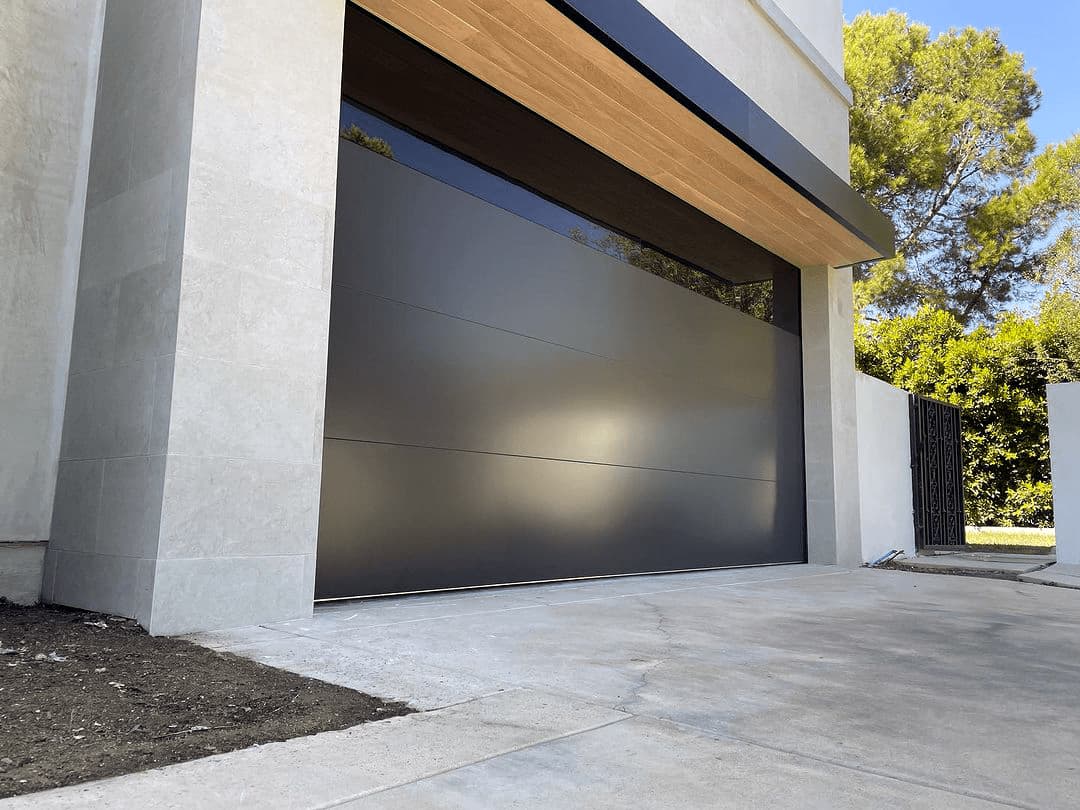
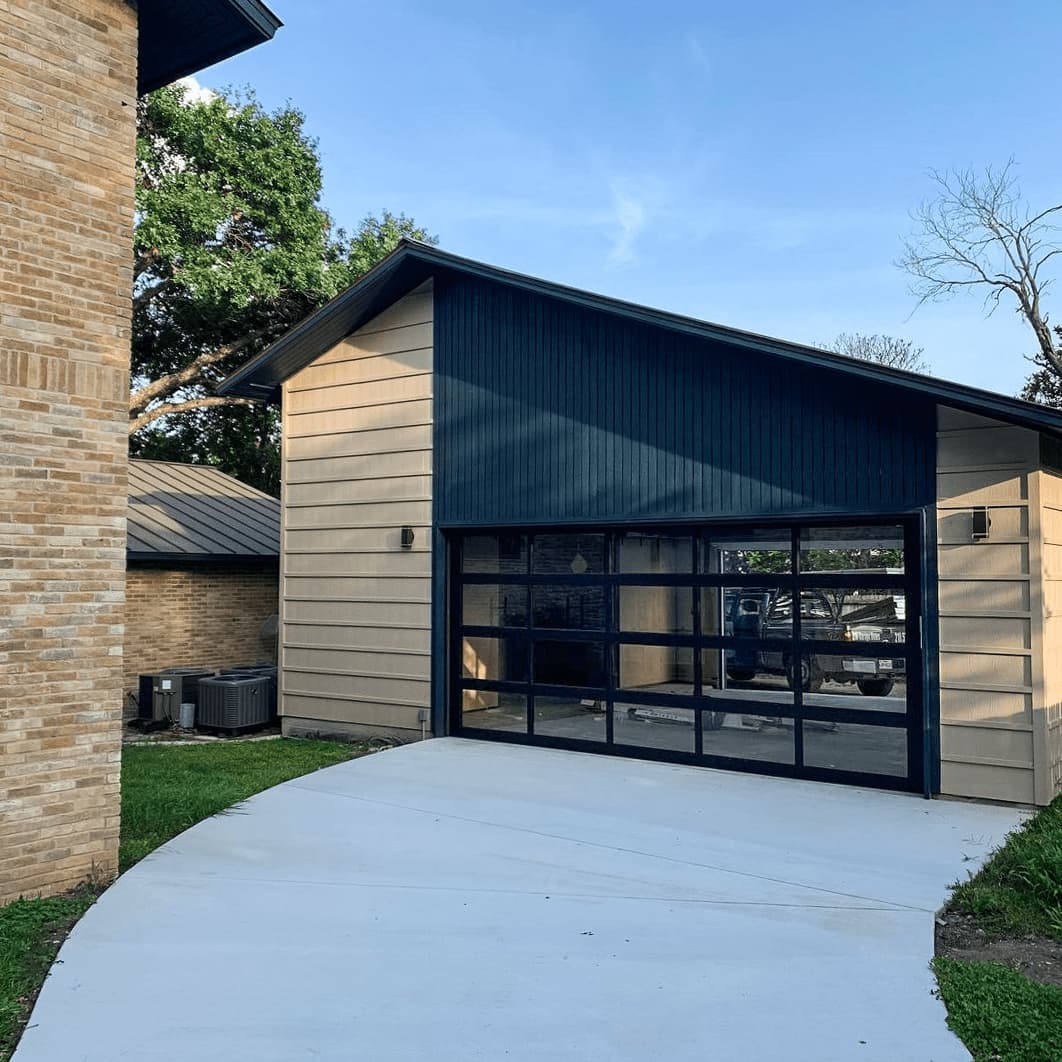
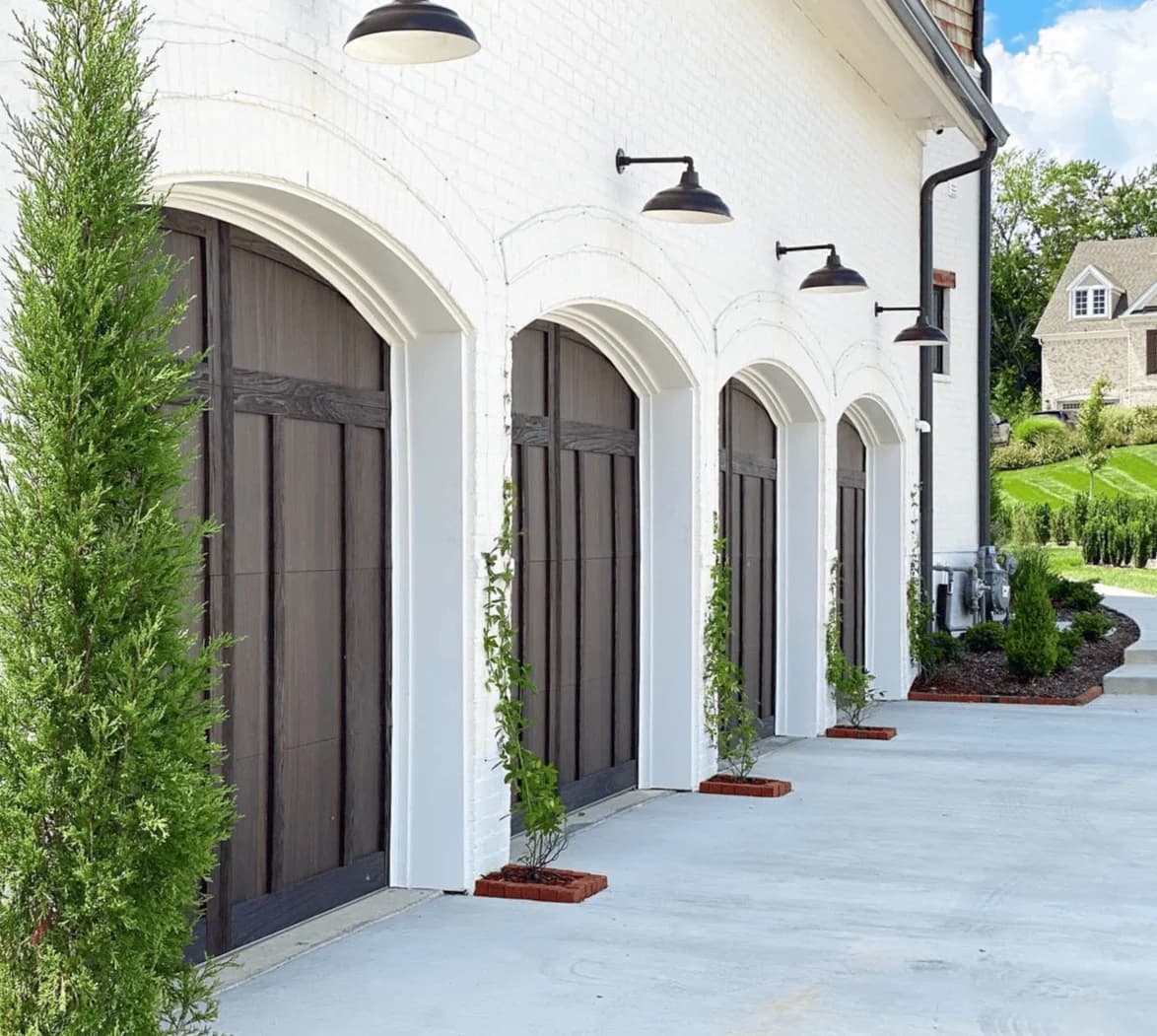
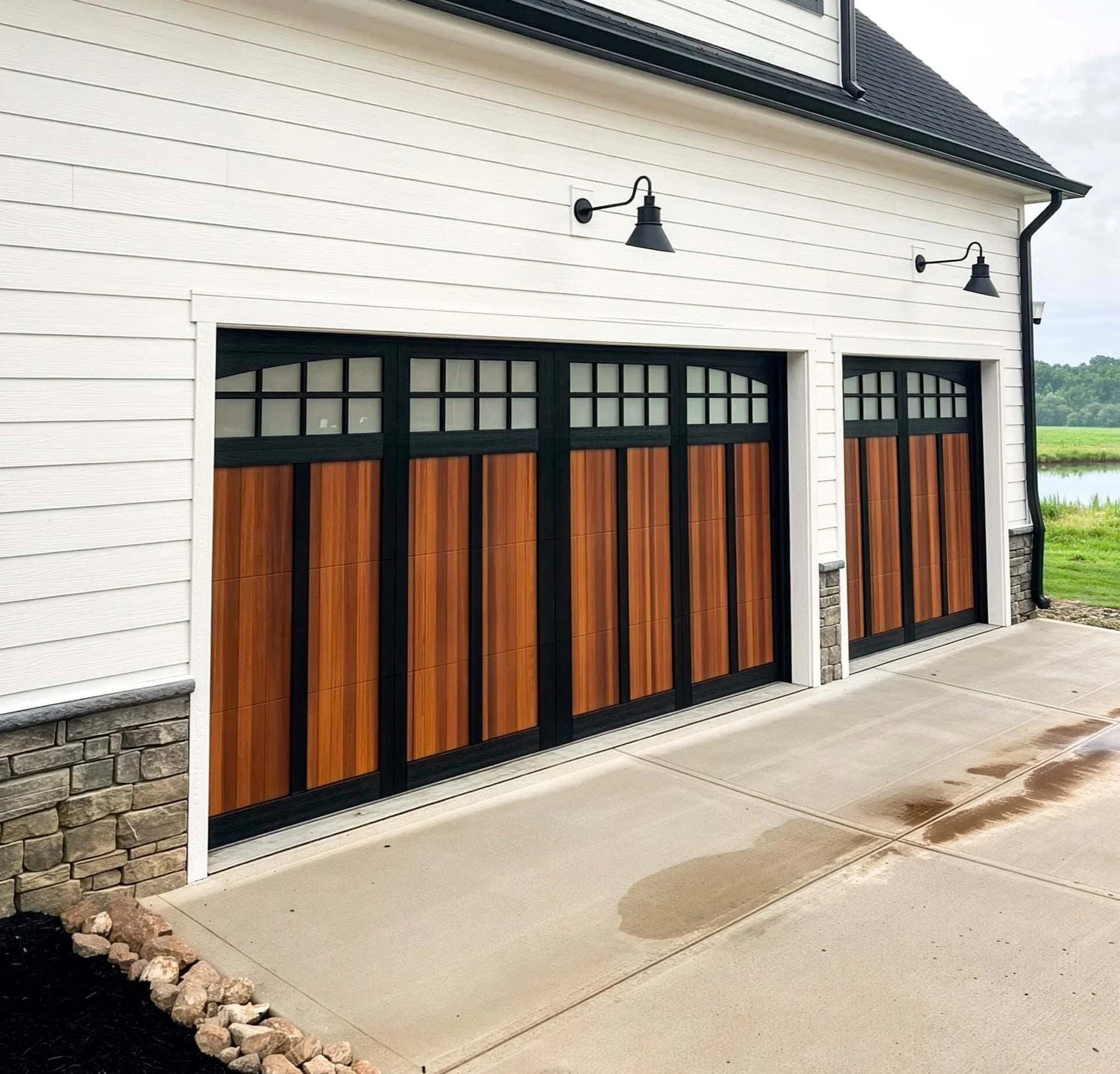
Once the construction is settled, style narrows fast, because the job of the door is to agree with the house. Traditional raised-panel and long-panel doors suit ranches and colonials and anywhere the garage shouldn't pull focus. Carriage-house doors, with divided-light windows and strap hinges, belong on craftsman, farmhouse, and cottage exteriors. Modern flush panels, cedar planks, and aluminum-and-glass want a contemporary or mid-century house with strong horizontal lines. Put any of the three on the wrong house and it reads as a mistake no matter how good the door is. All three, with the materials each comes in, are laid out on our residential garage doors page.
The easiest way to settle it's to stop imagining. CHI's Door Visions tool, linked from that page, lets you upload a photo of your own garage and put doors on it until one stops looking wrong.
Material is mostly a maintenance decision
Steel is the default for good reason: durable, low maintenance, takes insulation well, and it comes in wood-look finishes convincing enough that most people on the sidewalk won't know. It dents, and a scratch down to bare steel will eventually rust.
A composite overlay on a steel base gets you the stained-wood look with steel's maintenance, which is why most carriage-house doors are built that way. Real cedar or mahogany has a warmth nothing else matches and asks for refinishing every few years to keep it. Aluminum-and-glass full-view doors are light, rust-proof, and a real statement, and they insulate poorly, which is fine on a garage nobody heats.
So the question isn't which material is best. It's how much maintenance you're actually willing to do in five years.
Windows cost money and buy light
Windows do two things: bring in daylight and add interest to a big blank surface. They also add cost and take a little off the door's insulation, which is why they come after the first three decisions rather than before.
- Top-row windows are the most popular layout. Light in, no view of your garage from the street.
- Obscured, seeded, or frosted glass gives you light and privacy at once, which is the right call on a street-facing garage.
- Divided lights look right on carriage-house and traditional doors and give a plain door something to look at.
- Full-view aluminum and glass is a design statement, and the wrong answer if privacy or insulation matters to you.
Don't forget the opener
A new door is the right moment to deal with the opener, especially if yours is 15 years or older. A belt drive is dramatically quieter than an old chain, Wi-Fi and app control let you check the door from anywhere, and the safety and security features on a modern unit aren't close to what a 20-year-old opener has. Battery backup is worth asking about specifically if the garage is your main way into the house.
There's also a practical reason to handle it together: a new door weighs something different than the old one, so the springs get resized either way, and a tired opener that was already struggling will struggle harder.
Where the money actually goes
We won't quote specific prices here because they move with material costs and the specifics of your opening, but the tiers are consistent:
- Non-insulated single-layer steel is the entry point: affordable, no frills.
- Insulated steel is the sweet spot for most homeowners. Real gains in comfort, noise, and durability for a moderate step up.
- Carriage-house, composite overlay, and full-view is the premium tier, where you're paying for design and material as much as function.
- Real wood and custom doors are the top tier: special-order, and special.
Installed ranges for each are on our garage door cost guide. If spreading the cost out would help, ask us when we quote the job; there's more on our payment options page.
Ready to talk it through?
We do free estimates. We come out, measure your opening, listen to what you want, and leave you with a written estimate you can take your time with. No pressure and no rush.
Call (478) 274-0307 or fill out the form on our contact page when you're ready.